27.03.2026
TIRA - Efficient Facility Management through Robotics and Sensor Technology
Robotiikka ja data tuovat älyä kiinteistöhuoltoon – TIRA-hankkeen tilaisuus kokosi alan toimijoita
The TIRA project event brought together professionals from the cleaning and property services sectors to explore robotics and sensor solutions. The event showcased both company robots and pilot devices from the project.
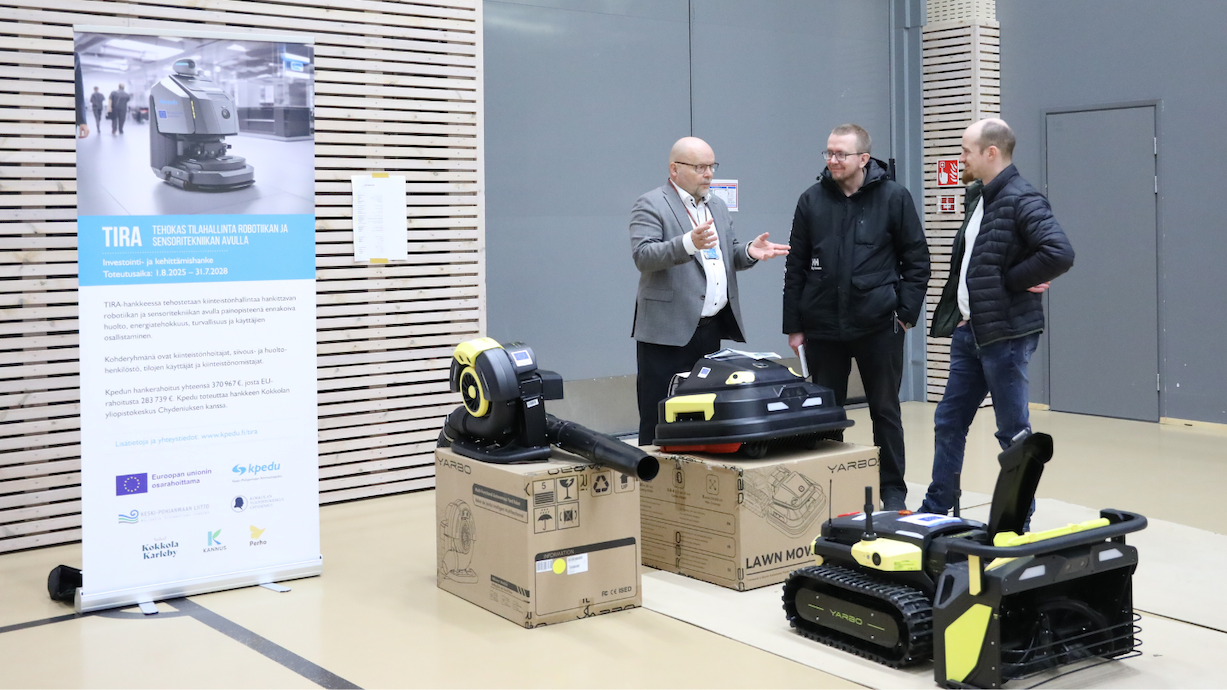
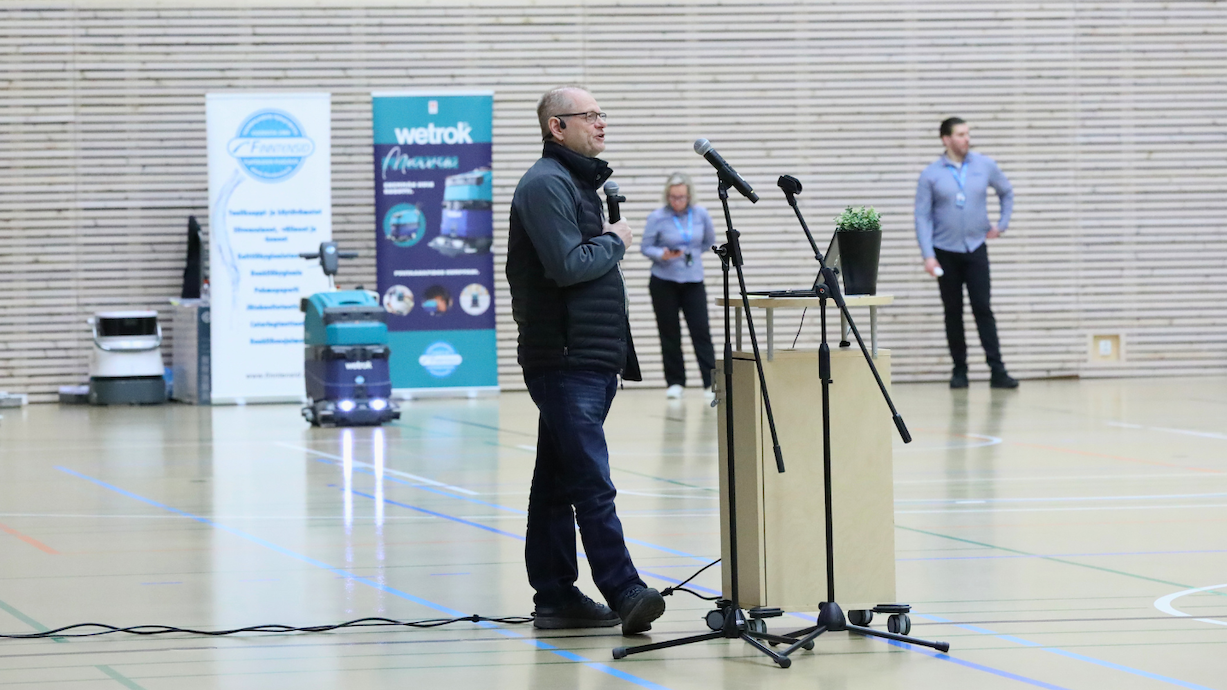
The event, organized by Kpedu and part of the TIRA – Efficient Facility Management through Robotics and Sensor Technology – project, gathered cleaning and property service professionals at Kampushalli to explore the possibilities offered by robotics and smart solutions.
In addition to the latest robotic solutions from companies, the event featured a pilot robot tested for outdoor area maintenance, which functions as a snow blower in winter and a lawn mower in summer.
Kokkola University Consortium Chydenius, acting as a sub-implementer of the project, is responsible for developing solutions related to sensor technology and data. At the university consortium, monitoring systems are being developed to collect information on space utilization, usage levels, environmental conditions, and real-time activity.
The collected data is used for both demand-based and predictive maintenance of properties and facilities. The goal is to target actions at the right time and place.
“Sensor data can, for example, help identify when cleaning or maintenance tasks are genuinely needed,” says Petri Jyrkkä, project manager at the university consortium.
In practice, the data enables various context-specific solutions:
- Low supplies → replenishment is triggered
- High usage → space is cleaned
- No usage → no action is taken
- Space reserved → tasks are postponed
- Space free → tasks can be performed immediately
- Space overcrowded → alternative solutions are sought
- Space underutilized → it can be allocated elsewhere
At the university consortium, collected data is analyzed and methods are developed to refine it. Based on the analysis, usage peaks, deviations in conditions, and future maintenance needs can be identified.
“Collecting data alone is not enough; understanding and utilizing it is essential. We visualize the analyzed information clearly so that facility managers can make informed decisions,” explains Jyrkkä.
The project combines practical experimentation with research-based development. Its aim is to create solutions that improve property maintenance efficiency, enhance indoor conditions, and support the smart use of resources.
The results of the project and the experiences gained will be presented in upcoming workshops and made available for use by industry professionals.
Extra information
Petri Jyrkkä, project manager