02.10.2023
Remote laboratory work
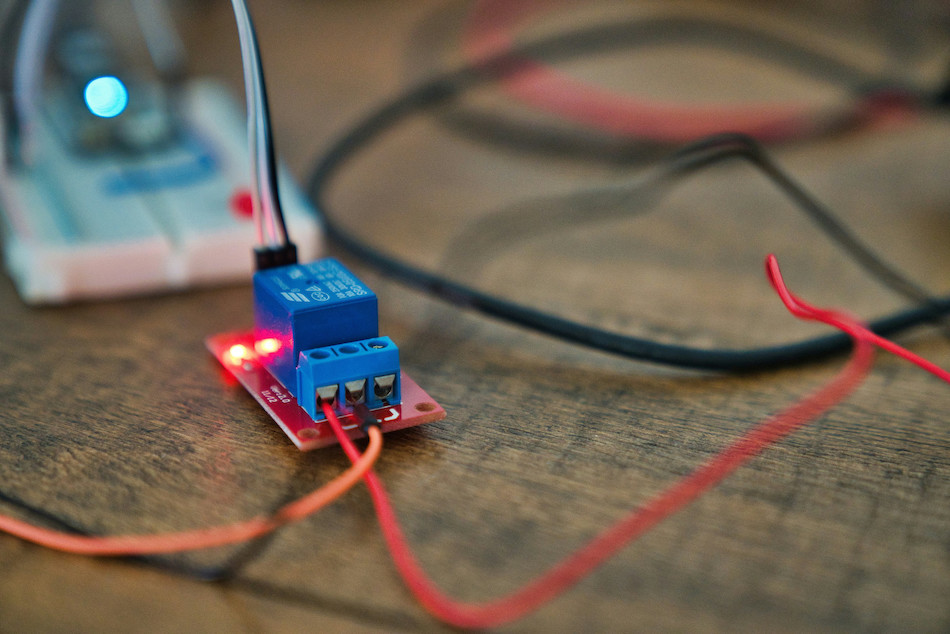
The main task and objective of work package TP2: Remote laboratory work in the Quality for Distance Learning (eLaatu) project is to develop remote laboratory and practical work for the Master's program in Information Technology. One of its objectives is to utilize existing and real-time measurement data produced and collected by sensor networks in students' laboratory and practical work. Another objective is to increase the automation of laboratory work inspection. To achieve these objectives, the data needs to be presented in a uniform format that also serves as documentation. In addition, it will enable the creation of a database containing open measurement data in the future.
The pilot for the work package is an exercise related to positioning in the course Laboratory Work with Resource-Constrained Devices (formerly Sensor Network Laboratory Work). In the exercise, students learn about RSSI-based positioning in outdoor sensor networks based on measurement data collected by the network. For the time being, the measurement data used in the exercise is the same for all students and has been collected previously. The main objective of this work is to utilize available, real-time measurement data in teaching.
In this case, the measurement data collected by the sensor network (WSN) nodes is first stored in the gateway (GW) internal database, from where it is forwarded to an external server for storage in a database (IoT platform). A user interface is implemented on the exercise page (OpenLMS) through which students can request the latest measurement data from the server and use it in their exercises. This ensures that each student has access to their own, latest available data. In addition, a user interface will be implemented for checking assignments and utilizing data for teaching purposes. The measurement data from the sensor network will be described using the GraphQL language. GraphQL will also be used to create the necessary interfaces between the GW and the IoT platform, as well as between the IoT platform and the user interface (data writing and retrieval).
So far, the necessary data definitions have been implemented in GraphQL language, and interfaces have been created for exporting data to the IoT platform and retrieving it through the user interface. The basic functionality of the user interface for retrieving data from the platform has also been implemented. At least data adequacy checks and the handling of possible exceptions will still be implemented in the user interface. In addition, a user interface for partial automatic checking of tasks will be implemented. The goal is to have the pilot laboratory work ready for educational use in the spring semester, after which the solution can be evaluated in a real teaching context by collecting feedback from students in connection with their assignments.