16.12.2025
TAKOMO Smart Environmental Monitoring in Industrial Areas
There are high snowdrifts..
...except that it isn't yet, but when it is, we will know how high the snowdrifts are. We installed digital snow depth gauges at four locations in the large industrial area of Kokkola. Two of the locations measure the snow accumulation throughout the winter (total accumulation), and two are locations that are plowed. A message is sent to the owner of the plowed location when the snow accumulation reaches a certain level and it is time to start plowing. At these locations, the snow level drops when plowing is completed and rises again during snowfall until it is time to plow again.
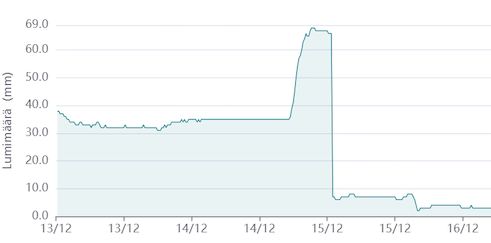
The purpose of measuring total accumulation is to monitor snow accumulation and melting without external influence.
Laser and ultrasonic meters in testing
The purpose of all sites is to evaluate the functionality and suitability of the devices and measurement techniques for different purposes. Based on previous comparisons, we are now using Lufft's laser-based snow depth meter and Decentlab's ultrasound-based device. There is a big difference between the devices in terms of price, measurement technology, and results.
Laser-based devices are clearly more expensive than ultrasound-based ones. Laser-based snow depth measurement is based on measuring the distance with a laser beam, which the device measures the time it takes to reflect back. The laser measurement result is reliable and accurate. When processing the data, any incorrect measurements are removed, e.g., when the laser beam measures passing snow.
The device is calibrated before use and the appropriate settings are checked. Lufft's device is mains powered and therefore requires more from the installation site than a battery-powered ultrasonic device.
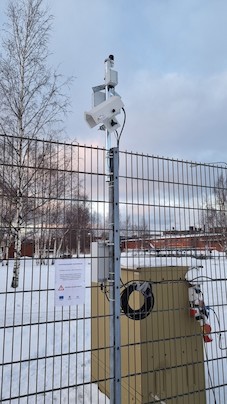
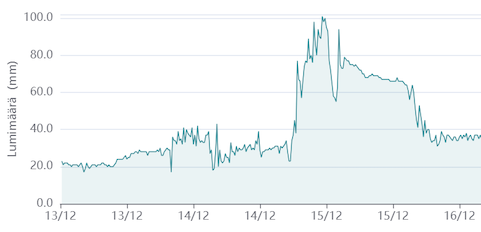
The strength of the lighter ultrasonic distance gauge is that it can be placed in locations where mains power is not available. The measurement results vary somewhat, so it is more reliable to follow the trend rather than individual measurement results. This can also be influenced by data processing. The strength of the Decentlab device is its built-in calculation, which increases the reliability of the device, for example, during snowfall. The device calculates the distance based on sound waves and sound velocity and collects several distance readings for each measurement. It discards all incorrect samples from these readings and calculates the most reliable value, which is reported as the result. Both devices transmit the measurement data wirelessly.
Now we just hope for snow and freezing temperatures so we can continue testing the devices!
More information:
News related cases
Snow depth measurementExtra information
Timo Hongell, project managerMira Hästbacka, project coordinator