24.02.2026
IoT learning environment
Once the background system is in place, connecting sensors is easy – meat thermometers as an example
A well-designed and implemented foundation is also a strong support in the IoT world. This is also the case in the learning environment implementation being built for Kpedu's educational fields, where traditional learning environments are being expanded with the help of IoT.
We use an IoT learning environment based on a ready-built background system. It is a kind of "base network" to which a wide variety of IoT devices and sensors can be connected – from thermometers to air quality sensors and from motion detectors to energy consumption meters. The system is designed so that adding new sensors does not require heavy programming or separate applications: all that is needed is for the device to be able to send data via Bluetooth, Wi-Fi, or MQTT communication, for example, and it can be integrated into the whole.
Meat production from start to finish
One clear example of this in the food industry is the common Bluetooth meat thermometer. Many people are familiar with it from their home kitchens, but when it is connected to an IoT learning environment, it becomes a real teaching tool. When the thermometer is inserted into the food product being prepared, it starts sending temperature data directly to the backend system. Home Assistant receives the data, MQTT handles the message flow, and the cloud service stores everything in real time.
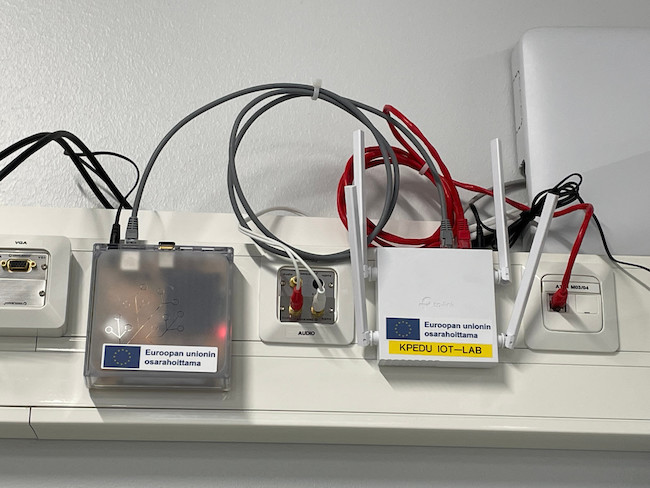
The backend system does almost everything automatically: it recognizes the thermometer, interprets the readings it sends, and draws clear graphs and diagrams from them. Students can quickly see how the meat thermometer data flows into the system and how, for example, the important cooling process progresses minute by minute. If something unexpected happens with the temperature, the system can send an alert or highlight the deviation with a graph.
The best part is that this same principle works for all sensors. Once the backend system is ready, adding a single sensor immediately shows students how IoT solutions are actually built:
- add a device,
- connect it to the system,
- monitor data in real time.
The meat thermometer is just one example—it is easy to understand and demonstrate directly in class. But at the same time, it shows that the same technical platform can be used for many other purposes: measuring air quality, monitoring energy consumption, humidity sensor data, or even data sent by motion detectors.
Once the foundation is in place, many new opportunities open up. And this is exactly what students get to see in practice.
How to recognize vibration?
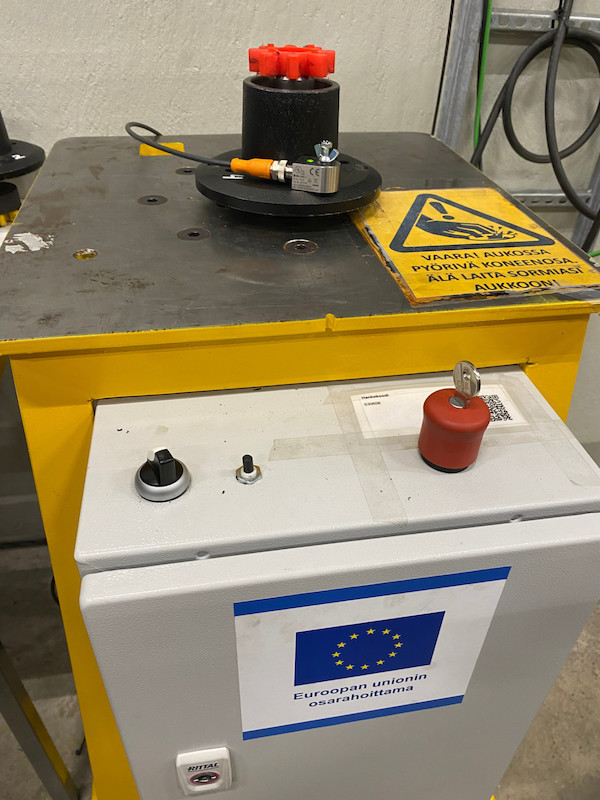
If the meat thermometer works in the food industry, a vibration sensor can be connected to the system in the field of mechanical engineering and production economics. In equipment maintenance, it is important to recognize when equipment needs servicing before it breaks down and causes a total stoppage of work.
Energy consumption under investigation
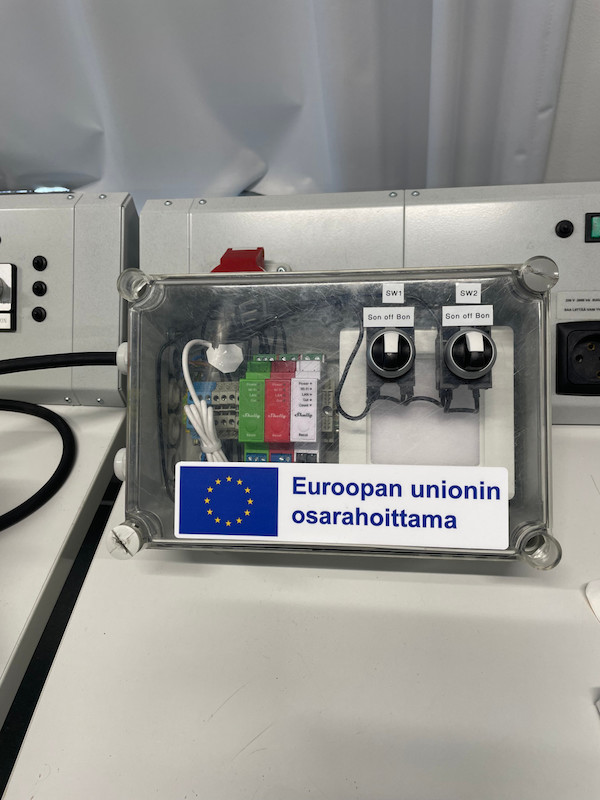
In the electrical and automation sector, sensors can be replaced with ones that are better suited to the field. For example, energy consumption meters can be used to generate data for the system, which can then be made visible to students. This expands their knowledge in the learning environment, as energy consumption can be visualized in a concrete way.
News related cases
IoT learning environment for the food industryIoT learning environment in the field of mechanical and production engineering
IoT learning environment for the electrical and automation industry
Extra information
Jukka Määttälä, university teacher