17.06.2026
IoT learning environment
Smart trash can measures food waste – IoT solution installed in Kpedu’s cafeteria
The IoT project course resulted in the creation of a smart trash can that monitors the amount of organic waste using sensors and displays the data in near real time.
During the spring IoT project course in the Master’s program in Computer Science, one student group tackled a concrete and timely challenge: measuring food waste in a school cafeteria setting.
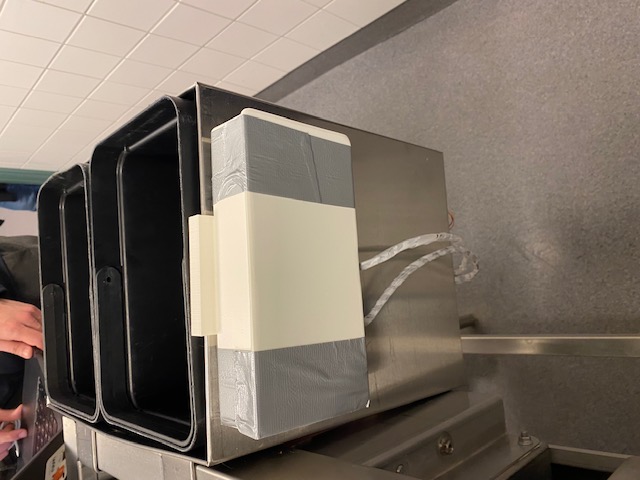
The practical nature of the project is underscored by the fact that it did not remain merely a prototype. At the end of the course, the equipment was installed in the Kpedu cafeteria, where it can be tested in a real-world environment as part of daily operations.
Sensors in the Trash Can – Data to the Cloud and Visible
At the heart of the solution is a measurement system integrated into the trash can. Weight sensors placed under the trash can monitor the amount of organic waste, and an ESP32 microcontroller processes the measurement data and transmits it wirelessly to the cloud.
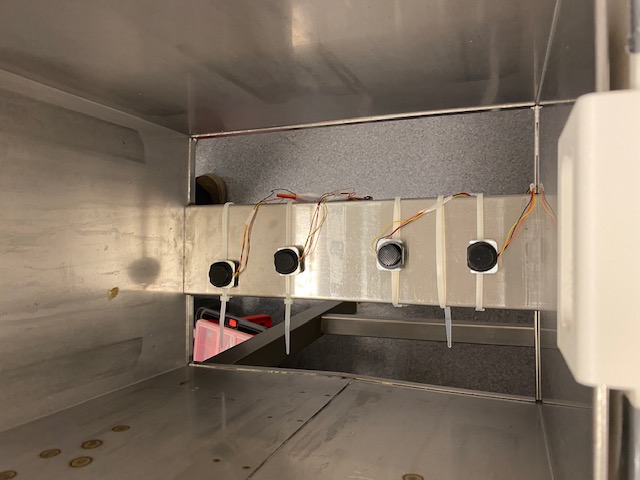
The system is designed to be energy-efficient: the device transmits data only when the trash can is emptied. This is detected by a sudden change in weight, at which point the system activates data transmission and sends the updated value for analysis.
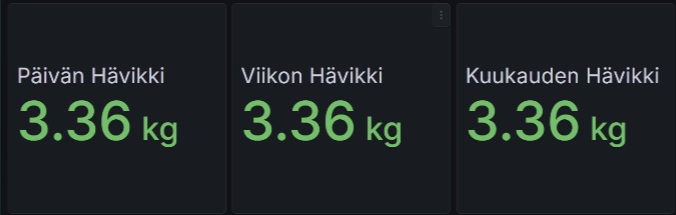
In the cloud, the data is stored and presented using Grafana as clear visualizations, such as:
• the amount of food waste accumulated during the day
• total weekly waste
• monthly tracking
This data can be displayed on the cafeteria’s information screens, allowing both students and staff to easily see the amount of food waste.
Installation in the Right Environment—A Key Step in Development
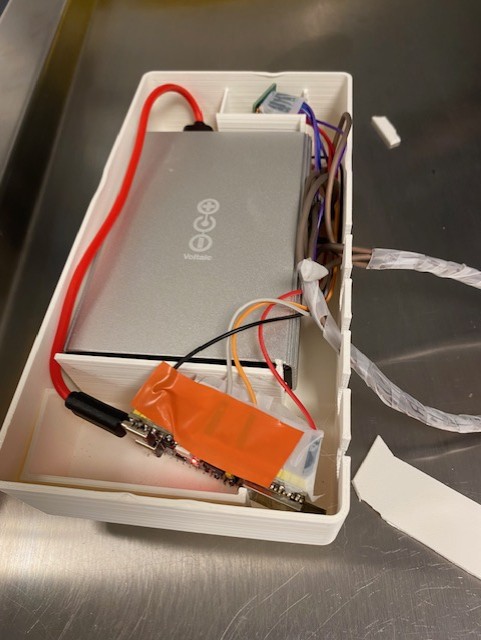
A key phase of the project was installing the equipment in the Kpedu cafeteria. Students prepared the equipment, including its enclosures and mounting solutions, prior to on-site installation.
In practice, the installation involved:
• placing the sensors and measurement module within the waste bin’s structure
• protecting the equipment with a 3D-printed enclosure
• implementing the power supply solution and testing the device on-site
Installation in a real-world environment is an important part of an IoT project, as many technical aspects—such as measurement reliability, connection performance, and device durability—can only be properly evaluated in a practical setting.
Project collaboration and broader goals in the background
The idea for the smart trash can project originated from the IoT Learning Environment project, in which the amount of biowaste is monitored as part of the learning environment in food industry education. The goal is to increase understanding of how waste is generated and to provide data to help reduce it.
In addition, the project supports the TIRA project (Efficient Facility Management Using Robotics and Sensor Technology), which develops new sensor-based solutions for facility management and the more efficient use of resources.
The smart trash can serves as a concrete example of how a single IoT solution can bring together teaching, research, and practical development work.
Opportunities for Further Development
Although the system is already operational, the project identified several opportunities for further development. One of the most important is linking the data to menus, which would allow for a more detailed analysis of which dishes cause the most waste.
Other potential areas for development include:
• a mobile app for tracking waste data
• automatic alerts for staff
• more comprehensive analytics and trend identification
• displaying data on multiple information screens
In addition, the system’s functionality can be refined, for example, by increasing the frequency of measurements or further improving energy efficiency.
An IoT Solution to the Challenges of Sustainable Development
The smart trash can demonstrates how a problem that seems simple—food waste—can be made visible and measurable using IoT technology. When data is brought to the forefront of everyday life, it creates better conditions for behavioral change and reducing waste.
At the same time, the project offers students valuable experience across the entire IoT development cycle: from idea to implementation and on to the actual operating environment. This serves as a good example of how learning, technology, and social impact can come together.
Files
News related cases
IoT learning environment for the food industryExtra information
Jukka Määttälä, university teacher