17.06.2026
The IoT Project Course Combines Programming and Hands-On Implementation – Students Developed Solutions for Real-World Needs
This spring, the University of Jyväskylä’s IoT project course had students working on hands-on projects rooted in real-world development needs.
The course focuses on the comprehensive implementation of an IoT system: students design and build solutions that combine sensors, data transmission, cloud services, and data visualization.
This time, the course featured three project groups, each of which carried out its own assignment based on projects from the IT department. The projects addressed topics such as environmental monitoring, monitoring of technical facilities, and reducing food waste.
Smart Trash Can Measures Food Waste in a School Cafeteria
One of the course projects was a smart trash can developed to monitor food waste. The group designed a sensor-based system that measures the amount of food waste in near real time and displays the data on an information screen.
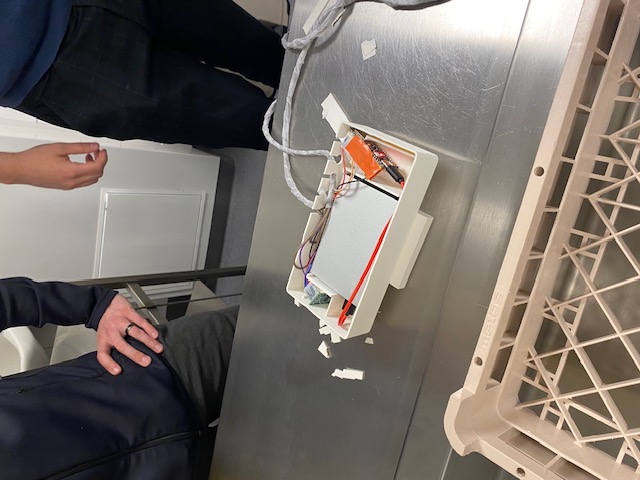
The final product was installed in the Kpedu cafeteria, where a large number of students and staff eat daily. Weight sensors placed inside the trash can measure the amount of food waste, and the device wirelessly transmits the data to the cloud for analysis and visualization.
The project is part of the IoT Learning Environment initiative, which monitors the amount of food waste generated throughout the day in food industry learning environments. In addition, the solution supports the objectives of the TIRA project (Efficient Facility Management Using Robotics and Sensor Technology), which aims to develop new ways to utilize sensor data in facility management.
In the future, the system will enable:
- compare food waste generated by different types of dishes
- provide historical data over a longer period
- raise awareness of food waste through information displays or a mobile app
Mobile measuring device monitors fluctuations in air quality
Another group developed a mobile particulate matter measurement system (Mopsi) that can monitor dust concentrations (PM10) in real time.
The solution is based on a portable device that can be mounted on a vehicle, for example. The device measures:
- airborne particulate matter concentration
- humidity
- GPS location
The measurement data is transmitted via the LoRa network to the cloud, where it is visualized on a map and as a time series using Grafana.
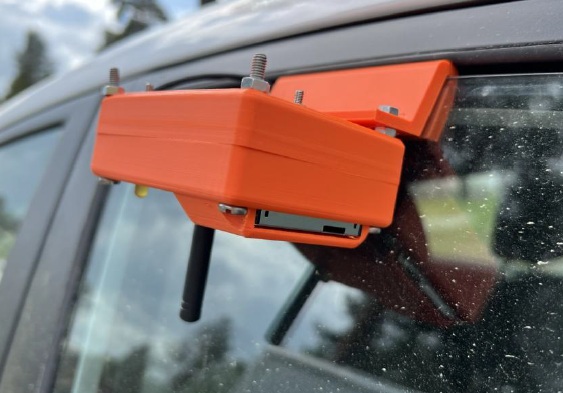
The goal of the project was to demonstrate that air quality can be measured cost-effectively over large areas—unlike with traditional fixed monitoring stations. A particularly interesting application is monitoring air quality in industrial areas.
The idea for the project stems from the University Center’s DustSense project, which focuses on air quality issues.
“DustGuard” optimizes the maintenance of technical facilities
The third group focused on monitoring empty technical spaces—such as electrical cabinets and equipment rooms. The project is known as “DustGuar".
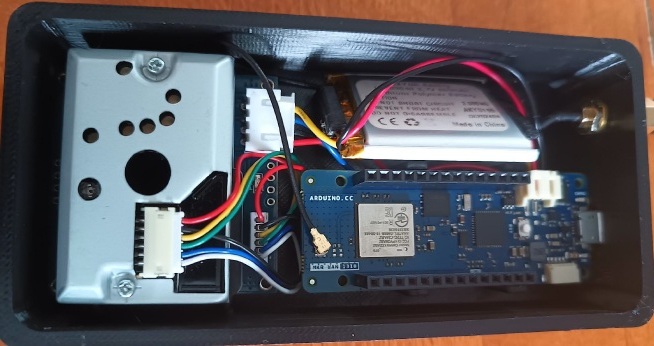
The goal of the solution is to transition from reactive or scheduled maintenance to needs-based maintenance. The sensor device measures dust levels and humidity and transmits the data to the cloud via the LoRa network. The measurement data is displayed on a dashboard, and critical values can trigger alerts.
The benefits are clear:
- maintenance visits can be targeted as needed
- costs can be reduced
- equipment reliability improves
“Dust Guard” originated as an idea within the “Efficiency, Productivity, and Competitiveness from Data” project.
You can find more information in finnish about the project in the presentation slides below:
Files
Extra information
Veli-Matti Tornikoski, project managerTuomo Härmänmaa, project manager