09.06.2026
Smart and sustainable living
Integrating IoT into Building Design: Insights from a Smart Building Project
Smart buildings are often associated with automation and energy efficiency, but they are much more than just technical devices.
The experiences from the "Smart and Sustainable Living" project show that integrating the Internet of Things (IoT) into construction projects requires careful planning and active communication among stakeholders. Based on the experiences gained from the project, industry practices could be strengthened by taking into account the requirements posed by new technologies as early as the initial stages of design, thereby ensuring that they remain aligned with the demands of increasingly widespread technological developments.
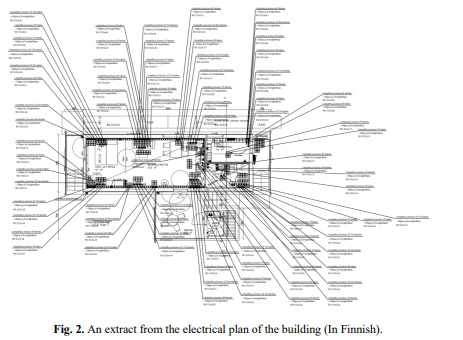
Traditional plans cover structural and building services engineering, but the addition of hundreds of sensors, networks, and software systems makes the whole system complex. IoT devices are often not depicted in plans using established methods, which in the worst case can lead to problems during the installation and commissioning phases. Furthermore, different experts approach systems from different perspectives, which increases the risk of only partially realizing the benefits of IoT equipment.
The IoT may be viewed merely as an add-on, even though it should be an integrated part of the building from the outset, especially in smart buildings. Late-stage planning not only complicates the competitive bidding and procurement of IoT projects but can also compromise system performance, for example, in terms of sensor placement.
Given the wide range of options available, the ability to select the right equipment and ensure a smooth implementation is crucial; it is not just price that matters, but compatibility, reliability, and scalability. Open standards are important for avoiding vendor lock-in.
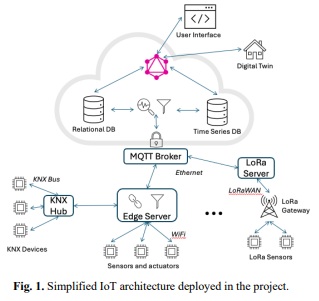
Software is also a key component of smart buildings: the collection, processing, and presentation of data require development and maintenance, which may be underestimated when preparing cost estimates and schedules, for example, as attention tends to focus on materials and traditional construction work.
A dedicated IoT plan that brings together use cases, devices, data transmission, integrations, responsibilities, and maintenance for a smart building would facilitate collaboration and reduce errors. Such a plan would bring IoT and software infrastructure on par with more traditional HVAC, plumbing, and electrical design, and would promote a systematic approach to integrating technology solutions throughout the various phases of a construction project.
As smart buildings become more common, new approaches are needed. Success depends on comprehensive planning from the very beginning—the IoT is an integral part of a smart building’s infrastructure, not just an add-on feature.
The project’s findings have been reported in the research article: Towards an IoT Plan for Smart Buildings: Lessons from a Real-World Construction Project. The article was published at the 20th International Conference on Research Challenges in Information Science (RCIS 2026 Forum).
Extra information
Lasse Harjumaa, senior lecturerPetri Jyrkkä, project manager